


Top
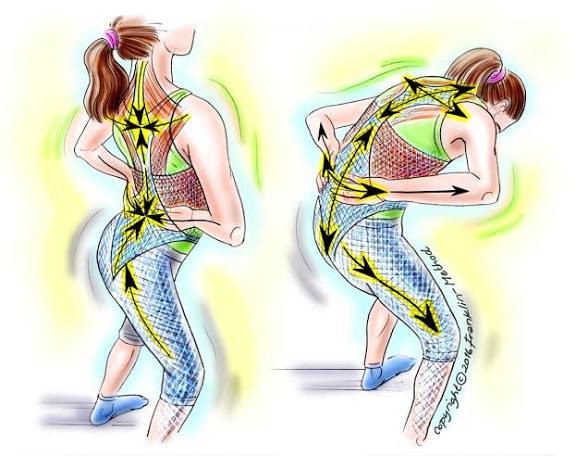
This class is a branch of my Peace, Joy and Love Ballet classes (see chapter the recent publication The Oxford Handbook of Ballet Pedagogy). This class is created through reflecting on three elements: the class is inspired by Alexis Pauline Gumbs’ book Uncrowned: Black Feminist Lessons from Marine Mammals. The class is informed by Eric Franklin’s imagery for anatomical movement of the back as a stingray. And lastly, stirred by the current Float Campaign of the British Coastguard – if in deep water: breathe and relax.
This version of a Peace, Joy, and Love Ballet class drawing on the ecosomatics of learning from kinships with marine mammals. The class includes a barre, centre, and across the floor dancing.
From Alexis Pauline Gumbs – Uncrowned: Black feminist Lessons from marine Mammals
‘How can we listen across species, across extinction, across harm? How does echolocation, the practice many marine mammals use to navigate the world through bouncing sounds, change our understanding of “vision” and visionary action? Is social media already a technology of bounce, of throwing something out there and seeing what comes back? ‘
‘In 2016, reports circulated with evidence that dolphin mothers sing to their babies while they are in the womb, and for a few weeks after so they can learn their names. Not only that, but according to the report, the rest of the pod holds space for the learning, quieting their other usual sounds so this can happen. (footnote: see many articles including Stephanie Pappas, “Mama Dolphins Sing to their Babies in the Womb” in LiveScience, August 9, 2026, https://www.livescience.com/55699-mother-dolphins-teach-babies-signature-whistle.html )
‘And then there are the ones who just show off. “Spinner” is the name given to a variety of dolphins all over the world who spin around themselves three to seven times in one leap and then land in the water again. There are a number of theories as to why they would do this, but no one really knows. Maybe we’re missing the message.’
‘And what I wonder is, what happens when we shift our behaviour beyond the characteristics most palatable to predatory “allies”? What happens when we value our mass impact as much as or more then our unique and haunting songs? And after we finish proving we are smart and capable of feeling to those who somehow think that it is wise to boil the world, what then?
I love the parts of you that no one thinks are particularly special. I love the basic you of you unmarketable and everyday. I love to be around you because the round around you thrills me. And lets get together again soon. A whole bunch of us.’
‘The adoptive dolphin mother they studied also lactated to feed the calf, whose gestational mother had died. Why, the authors of the study wonder, do mammals do this when, as they put it, “the behaviour is costly?” To them, “it is unclear why an animal would invest its resources in this manner,”
Does it seem unclear to you?
Who here has not been mothered by someone genetically and socially distant from your birth situation, at some necessary time? And if you have ever shared something, taught someone, shared responsibility for someone’s wellness for even a part of their journey, how would you measure what you gained from the potentially “costly behaviour?” We call it love.’
Though they are one of the few dolphins that scientists believe never whistle, they must communicate somehow because they choreograph. Sometimes they stretch out into a line to feed cooperatively, or make a large circle. Or in their most impressive synchronized swimming move, they make a flower formation with their bodies and flail until they create their own whirlpool and everyone eats.’
In Shark Bay, Australia, they starred vocally demanding a tax (in the form of fish) from fishing boats in the 1960s. And it was offered. Now tourist in that bay gladly bring the offering for the pleasure of being screamed at by a dolphins who then snatches a fish from your hand. (We all have our interspecies role-play dreams, I guess.)
I am proud of you dolphins who live among sharks, like the Indo-Pacific bottlenose does in much of her range. Thank you for the sharp message writ in your scars. The bite marks you wear as you demand back your birthright. Sharks usually try to eat Indo-Pacific bottlenose dolphin sat a very young age. So the dolphins stay close to each other and loud. And they gang up on fishing boats demanding their due.’

below are some related readings from my recent publications